Categories
Archives
Tags
action movies animation australian film backlots bad movies blockbusters bordwell clampett clause 101 close analysis criticism disney documentary film as heritage herzog humour indiana jones james bond james cameron kael looney tunes lucas matthew guy miff mocap obituary peter jackson pixar planning in victoria planning news politics science fiction silent film simcity spielberg star trek star wars superheroes tarantino tintin trailers vpp reform welles westerns zemeckisFollow / Subscribe
The options above cover all content. See below for selective subscriptions.


Film Content Only
www.sterow.com/film
Film Email Subscription
Film Feed
Urban Planning Content Only
www.sterow.com/urbanplanning
Urban Planning Email Subscription
Urban Planning Feed
Contact
-
Monthly Archives: February 2008
When Stanley Met Arthur
2001: A Space Odyssey (Stanley Kubrick, 1968)
The popular remembrance of the reception to Stanley Kubrick’s 2001 is of a generation of hip, pot-addled college students letting the sound and light show wash over them, and then arguing long into the night about the film’s meaning. In 1969 the veteran science fiction writer Harlan Ellison sarcastically complained about acquaintances boring him at 3am with lengthy treatises on the film’s commentary on “the philosophy of the Vedantist movement, and the incredibly brilliant tour de force of Nietzsche-esque subplotting Kubrick pulled off.” Critics’ reviews at the time alternated between those hailing a masterpiece and those deriding the film as a pretentious con.
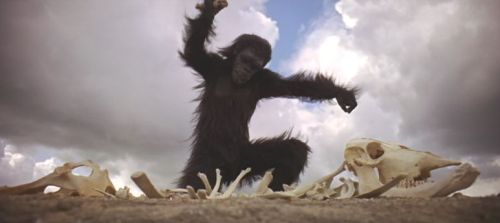
As much as it would have been fun to have been part of that initial wave of appreciation, looking back it’s hard to see what was so puzzling about 2001. While the film has never quite shaken its reputation for inscrutability, watching it today there’s nothing so mysterious about it. Not only have there been many more genuinely obtuse science fiction films since (starting with Andrei Tarkovsky’s Solaris in 1972), but the basic themes and devices of Kubrick’s film have been so absorbed into the genre that they now seem like familiar standards. Yet 2001 hasn’t been reduced by this process: if anything, that increasing comfort with its message and approach has defused the criticism of those who would dismiss it as a pretentious think-piece. And when we no longer characterise it as a giant-budget art film, it’s easier to appreciate its grandeur on its own terms and also to discern its lasting impact on a wider front.
Posted in Film, Film Reviews
Tagged art film, arthur c. clarke, kael, kubrick, science fiction
Leave a comment
Indiana Jones and the Kingdom of the High-Res Trailer
How very, very strange is it to actually see new Indiana Jones footage? But here it is, in the new Indiana Jones and the Kingdom of the Crystal Skull trailer.
A couple of the effects look overly computerised (that ravine-side car chase looks like the awful brontosaurus chase in King Kong, and some of the temple stuff looks like it belongs in one of the Stephen Sommers Mummy movies). But I really like the feel of the warehouse stuff: it has a good, classic Indiana Jones-ish feel to it.
First Monster Perspective
Cloverfield (Matt Reeves, 2008)
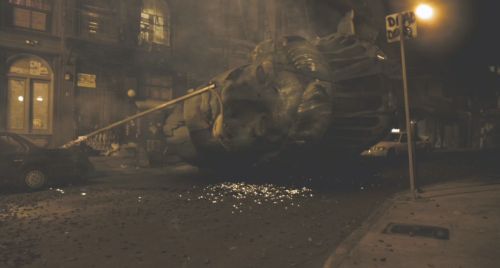
After all the viral marketing and secrecy, it turns out that there’s nothing that secret about Cloverfield. It’s exactly what it looked like in that original teaser trailer: basically, a giant monster terrorising New York, shot on a handycam by affluent yuppies who must run for their lives. The film is structured as an uninterrupted playback of the full contents of a memory card from a digital video camera; after a brief prelude, it starts with a party as these privileged young New Yorkers prepare to farewell their friend Rob with a surprise party. But then (as we saw in the teaser) there’s a blackout, and a distant explosion, and the head of the statue of liberty lands in their street. Cue running, and screaming, and a fair bit of stomping and biting.
Posted in Film, Film Reviews
Tagged disaster movies, first person perspective, j.j. abrams, monster movies, science fiction
Leave a comment


